Mastering Masking Fluid
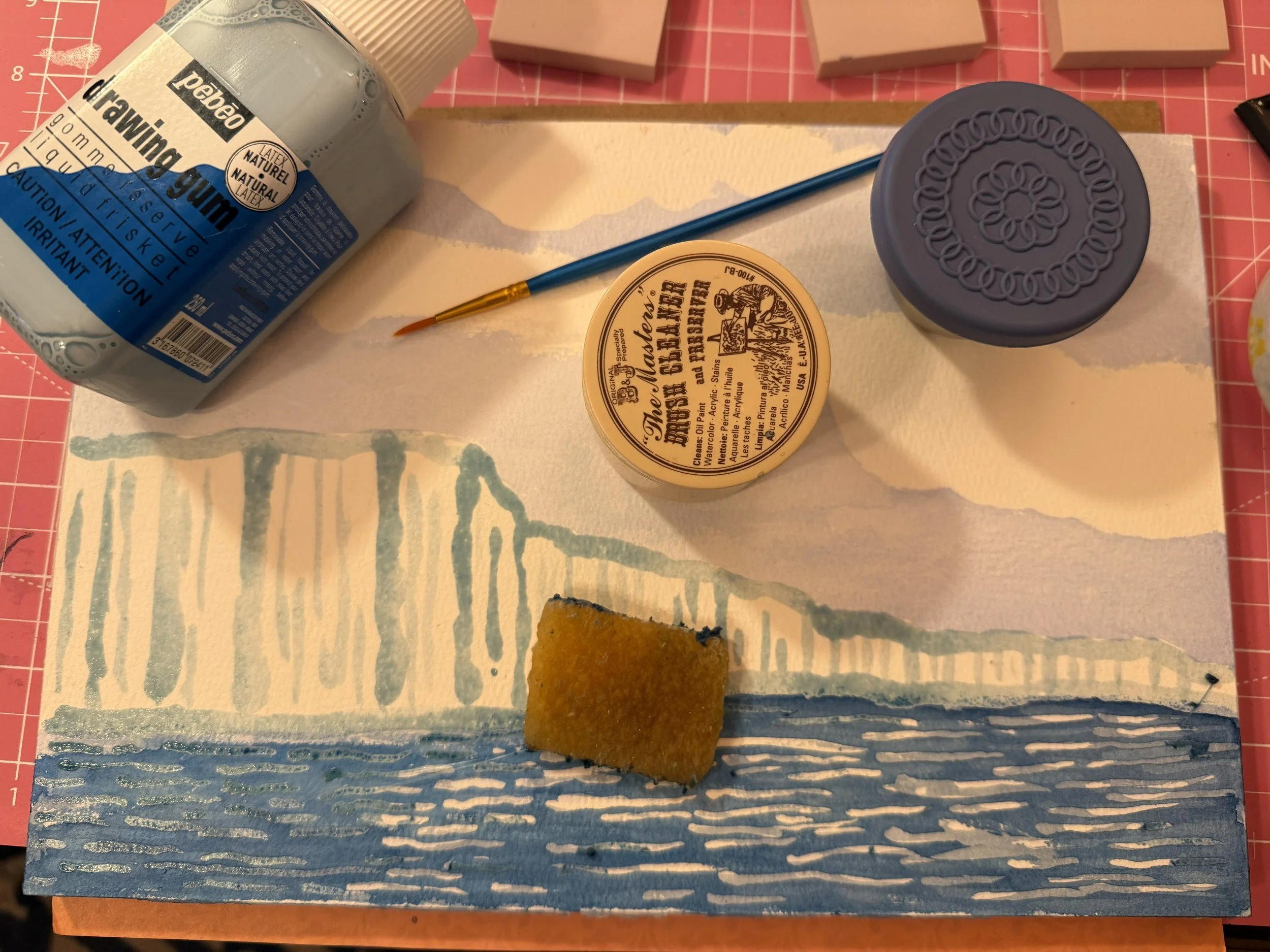
My tools are latex drawing gum as the masking fluid, a sealable container for the fluid, brush soap, cheap brush, and a rubber eraser made to remove masking fluid. Not pictured: Hair Dryer.
I've had an abusive relationship with masking fluid - to the point where I'd have used acrylic rather than destroy my paper further. But watercolor demands masking fluid to preserve the texture and transparency only watercolor can provide...so here I learn to use masking fluid correctly.
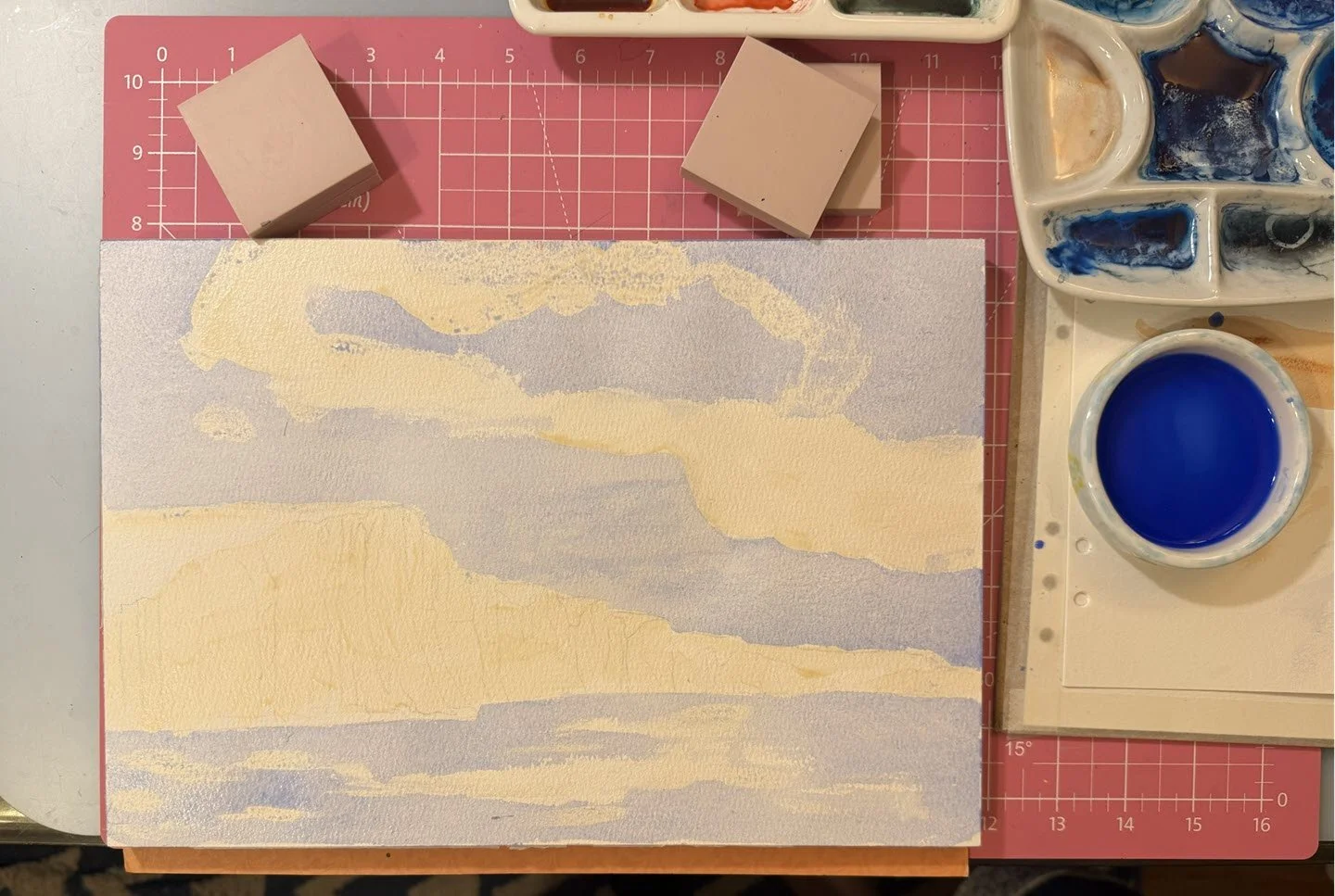
I used Daniel Smith masking fluid for my first pass and let it dry 2 days…this made it a bit rough getting off and I was worried I had damaged my paper a bit…but it seems so far it has only been in my imagination.
Learning lesson - Don’t let masking fluid dry too long.
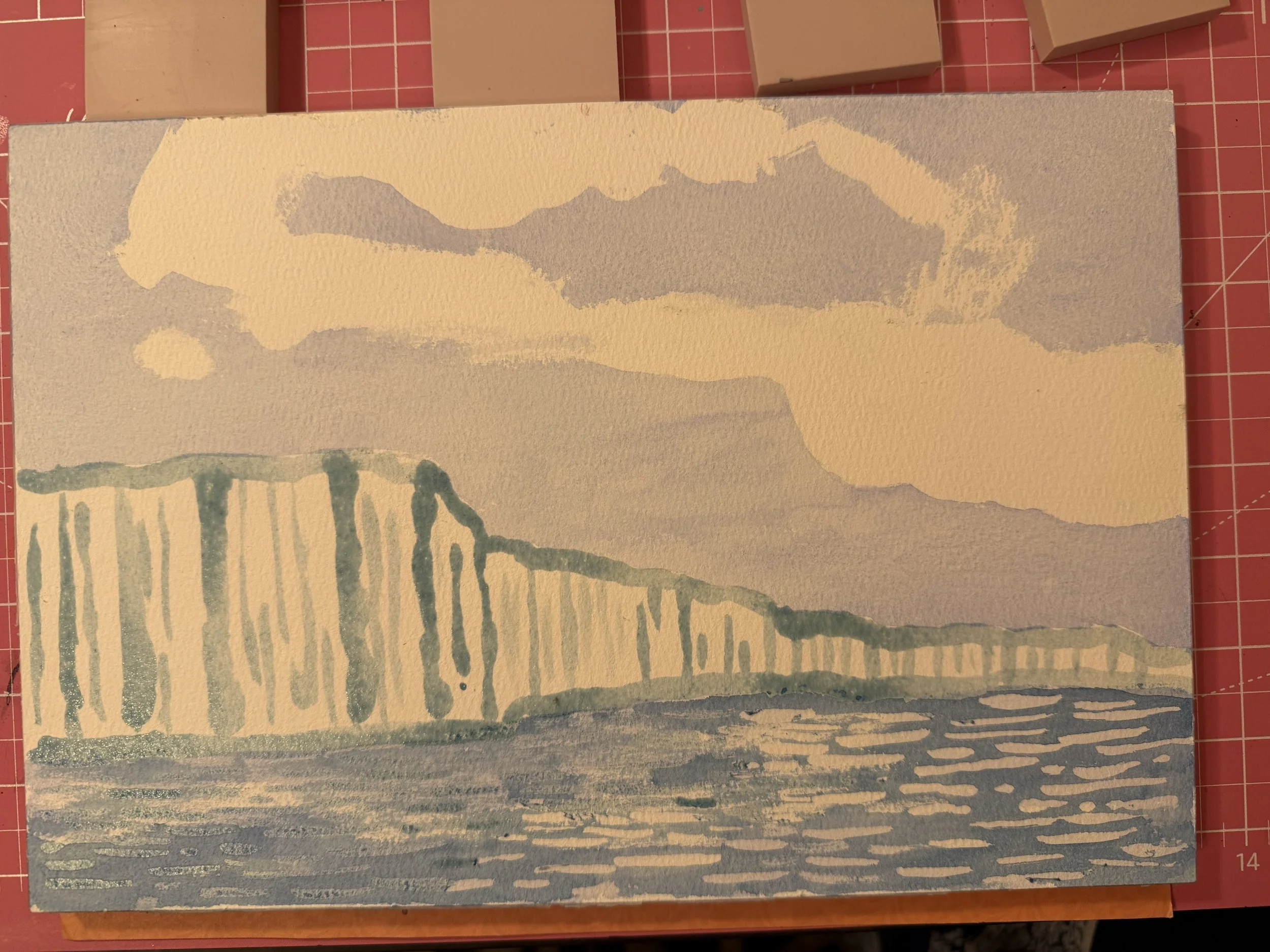
First pass of Prussian Blue over 2nd pass of masking fluid
Here I switched to a blue masking fluid so I could see it more clearly when applied to the paper. The Daniel Smith I used for the first pass applies as a nearly invisible glue like substance…and I wanted to get an idea of where it was as I was using a brush to apply it.
I had the idea of adding a wash of paint, removing the old masking fluid, adding new masking fluid in different places, then applying a second wash in an attempt to get some sort of wave reflection hint. I’m not sure how it will work out, but it also meant adding and removing layers upon layers of masking fluid - which meant I needed to to it right or damage the paper. It also helped me get over the fear of removing it.
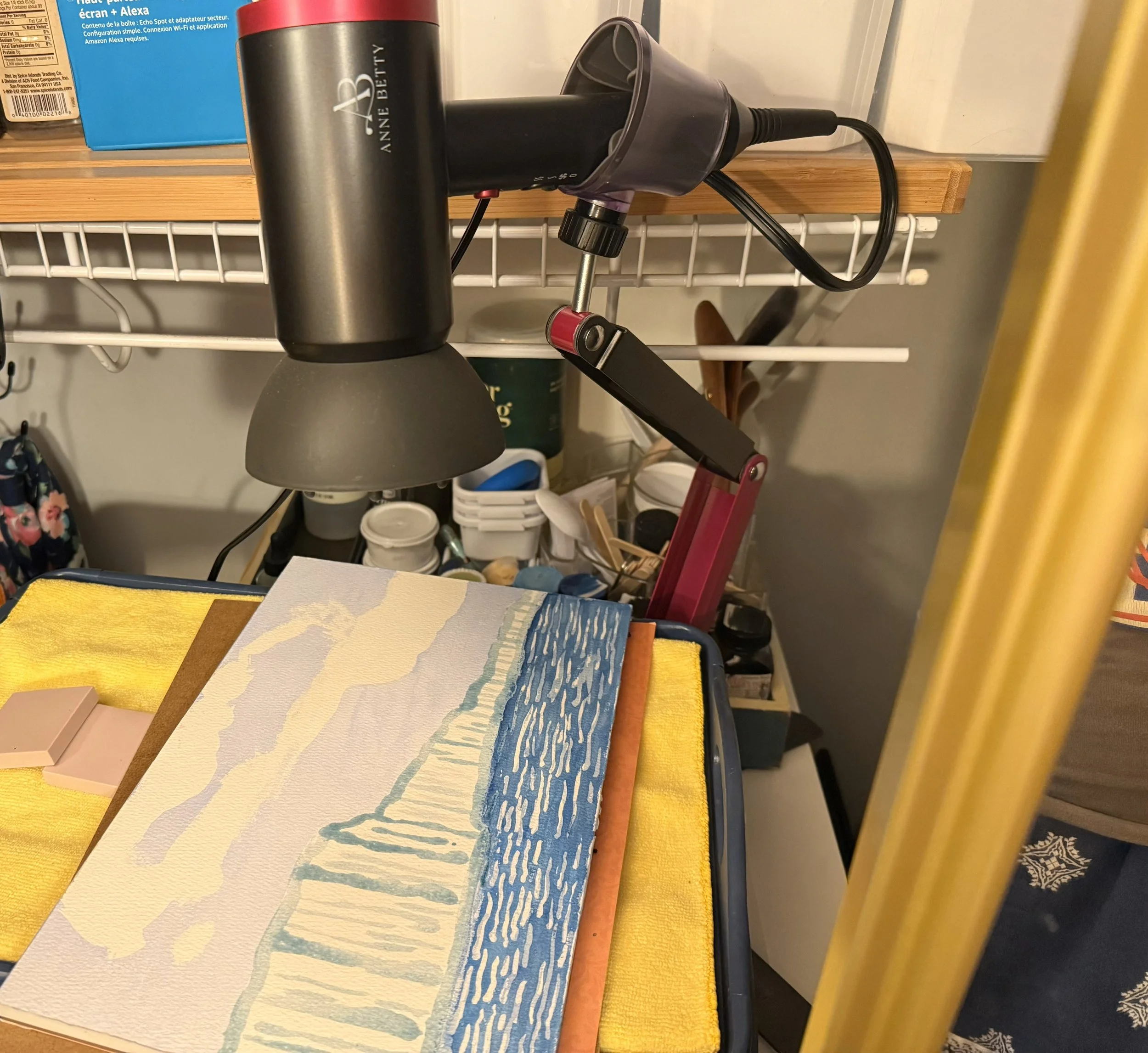
I have a nice setup where I have a hairdryer on a stand with a diffuser (an attachment that spreads out the air so it blows over a wider area with the added benefit of it not blowing as strongly) where I can place my paintings. I have another nice feature where I have a Zigbee plug (something which is used for smart homes) and programmed a setting which I connected to my iPhone where the plug only turns on for 3 minutes before turning off again. With the shortcuts feature I made it into a button I can just press on my phone. I love it.
All of this is set up in my closet - so I can also just close the door for the noise dampening benefits.
Heating the masking fluid also makes it easier to remove - and 3-4 minutes of drying on low heat completely dries the paint and fluid.
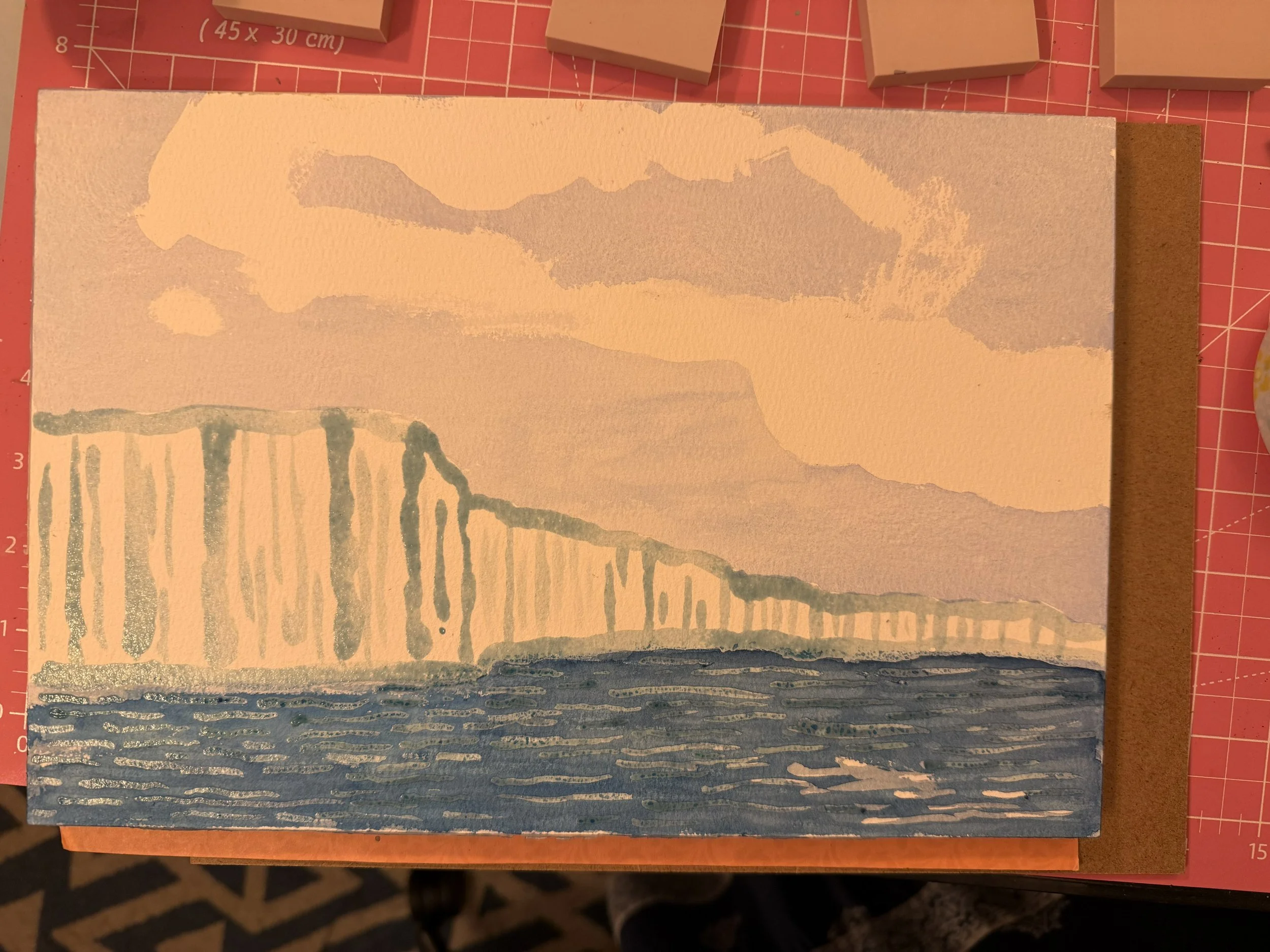
Second pass using the same masking fluid pattern was made with another layer of mid opacity Prussian blue. I make sure to change the locations of where I’m putting the masking fluid so I capture each layer of watercolor. I learned this from a negative space painting lesson I can write about as well - it creates the illusion of depth. Here…I’m not sure it will create the result I’m going for but this is just a trial.

After my base wash of French Ultramarine and then two passes of Prussian blue, I decided to keep going in the green direction of my blues. For me, greener water is associated with shallower or closer water, and in this image I’m imagining the water to be shallower on the left hand side where the cliffs are closest to me. So this pass is a wash of Phthalo Blue (Green Shade) mixed with some Prussian Blue on the left hand side, fading into pure Prussian blue wash on the right. It’s hard to tell in this image…and I’m thinking I’ll need to intensify the green shading.
Side note - Phthalo Blue is a much more intense/strong pigment and I did not need as much of it as I needed of the Prussian blue.
